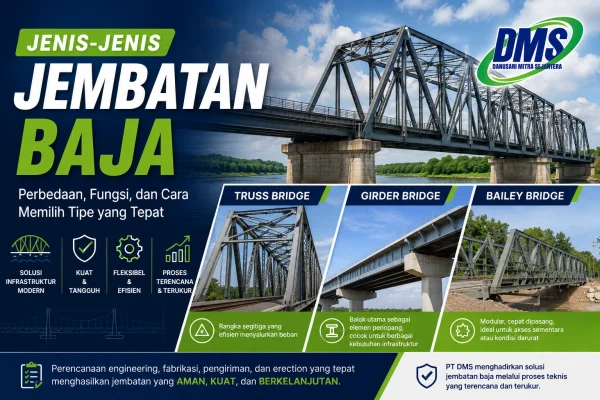
Get to know the types of steel bridges and their functions in modern infrastructure
Steel bridges are one of the construction solutions that are widely used in modern infrastructure development. Steel material was chosen because it has high strength, good durability, and is able to cover long spans with a structure that is relatively lighter than other materials. Various road projects, railway lines, industrial areas, and access to mining sites utilize steel bridges to ensure safe and efficient connectivity.
However, not all steel bridges have the same form and function. Each type is designed to answer different needs, ranging from geographical conditions, span length, load capacity, to speed of the construction process. Therefore, the choice of bridge type must be carried out through thorough technical studies so that the structure is able to provide optimal performance throughout its service life.
Truss Bridge: Efficiently Transmitting Loads over Long Spans
One of the most well-known types of steel bridges is truss bridge or truss bridge. Its distinctive feature is the arrangement of steel bars that form a triangular pattern, resulting in efficient force distribution throughout the structure. This geometric shape allows the bridge to support large loads with relatively more economical use of materials.
The working principle of a truss bridge is based on the distribution of tensile and compressive forces on each frame element. When a vehicle passes over a bridge, the load will be distributed evenly through the frame members to the fulcrum. Because each element works according to its function, the risk of deformation can be minimized.
Another advantage of a truss bridge is its ability to span long spans without requiring many pillars in the middle of a river or valley. This makes this type of bridge often used in national road projects, railway lines, industrial areas, or access to areas that have quite challenging terrain conditions.
However, the truss bridge fabrication and installation process requires a high level of precision because of the large number of components and connections. Small errors in the dimensions or position of connections can affect the erection process and overall structural performance.
Girder Bridge: Simple Solutions for Diverse Needs
Apart from the truss bridge, bridge girders has become one of the types of steel bridges that is most widely applied in various infrastructure projects. The main structure of this bridge uses steel beams (girders) as load-bearing elements which are then supported by pillars or abutments.
The design of a girder bridge is relatively simpler than a truss bridge so the fabrication and installation process tends to be faster. This type is very suitable for short to medium stretches, such as urban roads, toll roads, flyovers, or access to industrial areas.
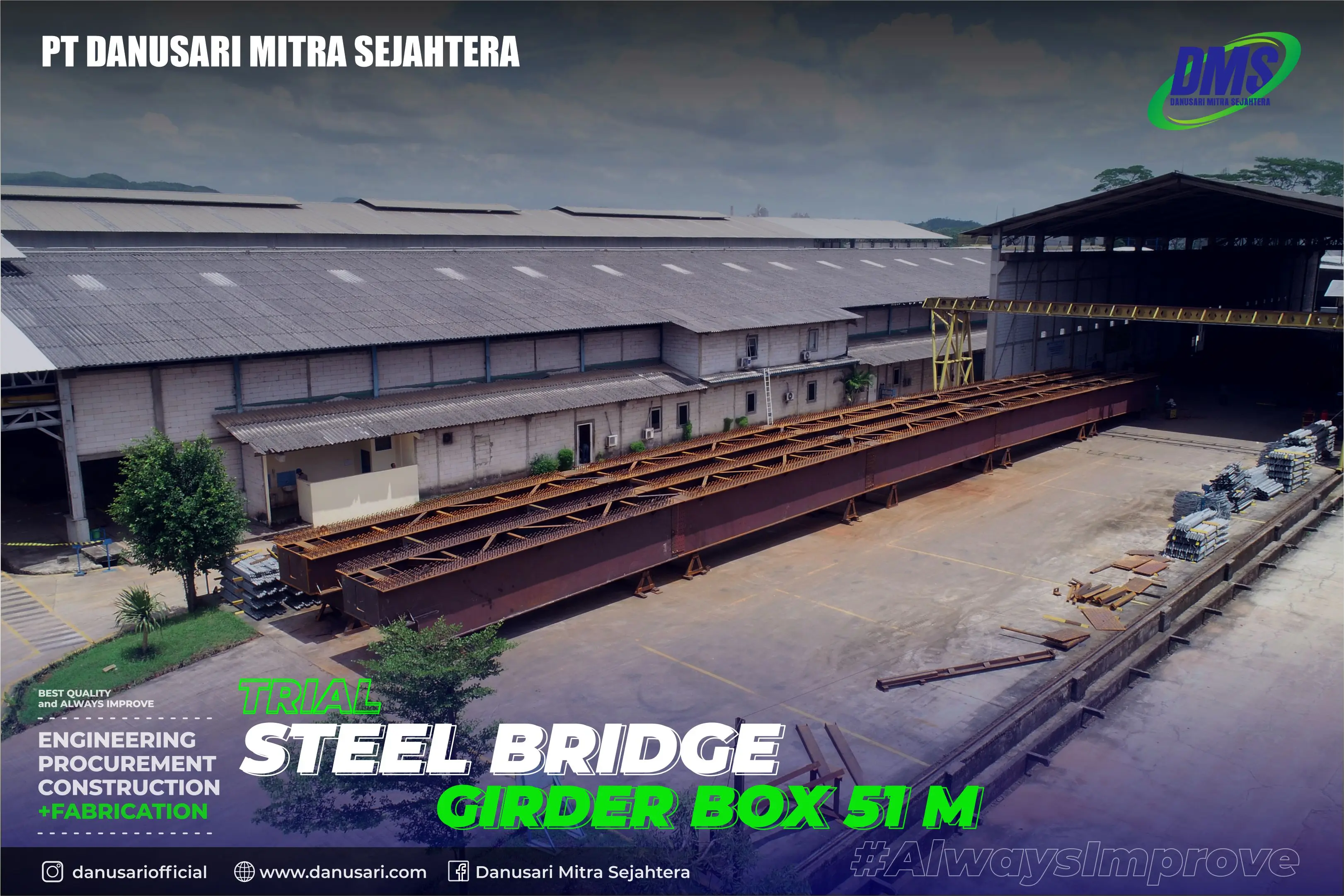
The main beam in a girder bridge can use various steel profiles, such as I-girder or box girder, depending on design requirements and the load capacity that must be supported. The choice of profile takes into account aspects of strength, material efficiency and ease of production process.
Because it has fewer components than a truss bridge, girder bridge maintenance costs are also relatively easier to control. This is what makes it a popular choice in various infrastructure development projects in Indonesia and in various other countries.
Bailey Bridge: Modular Bridge for Quick Installation
When access is needed that can be built in a short time, Bailey bridge is often the most effective solution. This bridge uses a modular system in the form of steel panels that can be assembled at the project site without requiring too complex construction equipment.
The modular concept allows Bailey bridges to be installed quickly, even in remote areas or locations that are difficult to reach by heavy equipment. Therefore, this type of bridge is widely used as temporary access during construction, as an emergency route due to natural disasters, as well as for military needs.
One of the advantages of the Bailey bridge is its flexibility. Components can be disassembled and reassembled at other locations as needed. This provides high economic value, especially for projects with high mobility or short-term use.
Even though it is often considered a temporary bridge, the Bailey bridge is still designed with certain safety standards so that it is able to withstand vehicle loads according to a predetermined capacity. However, planning must still pay attention to field conditions so that structural performance remains optimal.
Factors Determining the Selection of Steel Bridge Types
Selection of the type of steel bridge not only considers the shape of the structure, but also various interrelated technical aspects. One of the main factors is the length of the span that must be traversed. The longer the span, the more complex the structural system required.
Soil conditions, river characteristics, location elevation, and potential traffic loads are also the basis for determining the most suitable bridge type. Apart from that, the availability of access to the project location will influence the component delivery method and the erection process in the field.
The cost aspect is also an important consideration. The most economical structural choice is not always the one with the lowest fabrication price, but rather the one that provides the best efficiency throughout the project life cycle, from production, installation, to maintenance.
Therefore, the decision-making process usually involves collaboration between the planning team, structural engineer, fabrication team, and implementing contractor so that the chosen solution truly suits the project needs.
The Importance of Planned Fabrication, Delivery and Erection
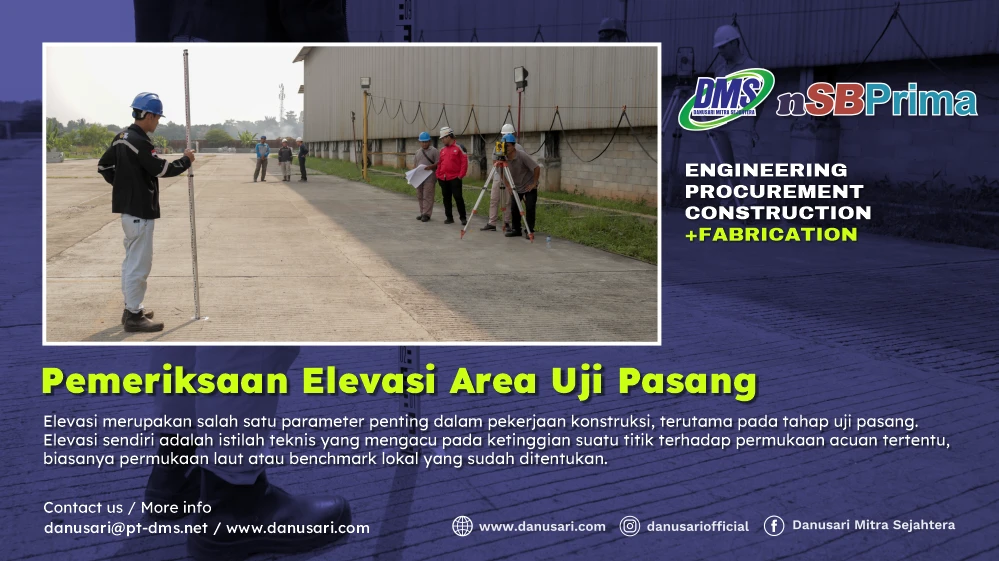
The successful construction of a steel bridge depends not only on good design, but also on the implementation of each stage of construction. Fabrication must be carried out with a high level of precision so that all components match the shop drawings and can be assembled without obstacles.
After the production process is complete, components need to be given clear identification so that the delivery process to the project location can be carried out systematically. Correct marking will make it easier for the erection team to recognize the order of installation of each structural element.
At the erection stage, coordination is a very determining factor. The use of lifting equipment, connection methods, and setting the installation sequence must follow previously planned engineering procedures. This approach can reduce the risk of errors, speed up construction time, and maintain work safety during the process.
PT DMS Commitment in Supporting Steel Bridge Solutions
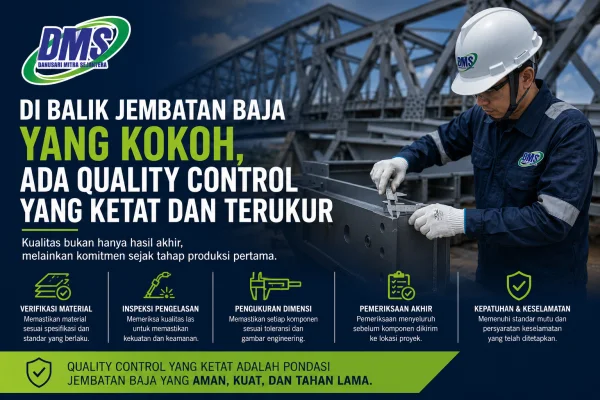
As a company engaged in steel structure fabrication, PT Danusari Mitra Sejahtera (PT DMS) committed to presenting solutions that support the needs for steel bridge construction in various sectors. The work process starts from understanding project needs, continues with technical coordination, precise fabrication, to quality control at every stage of production.
PT DMS consistently implements measurement, inspection and quality control processes to ensure each component meets the required technical specifications. This support helps produce steel structures that are ready to be shipped, easy to install in the field, and able to provide performance according to plans.
With careful engineering planning, precise fabrication, and good coordination during the delivery and erection process, each type of steel bridge can provide maximum benefits for infrastructure development. Through this approach, PT DMS continues to support the creation of steel construction solutions that are strong, efficient, safe and have high reliability for various project needs in Indonesia.
PT. Danusari Mitra Sejahtera remains committed to delivering the best service to our clients. With over 19 years of experience in steel construction and fabrication, we support national infrastructure projects.
"Quality is our top priority in every project we deliver."
For more information about our products and services, please contact our team.