From Workshop to Field: Steel Fabrication Processes that Determine Structural Quality
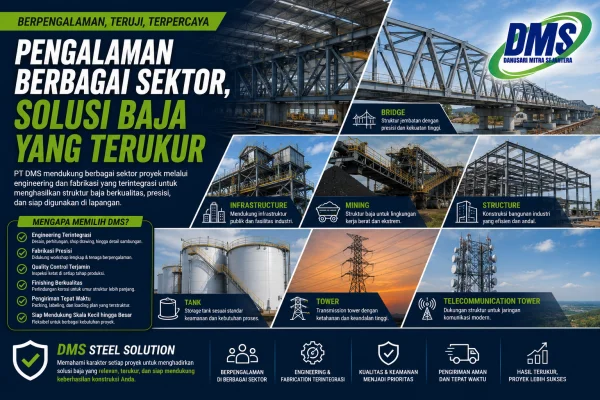
When looking at a steel bridge, substation, transmission tower, or industrial structure standing tall in the field, many people only see the end result. In fact, behind every structure that successfully operates well, there is a long process that begins long before the components arrive at the project site. It all starts in the fabrication workshop, where raw steel materials are processed into construction components that are ready to be installed.
In the modern construction industry, fabrication workshops have a very important role. This is where the production process is carried out in a planned, measurable and controlled manner to ensure that each component meets the established engineering specifications. The quality of the structure that will stand for decades is very dependent on the quality of the processes that take place at this stage.
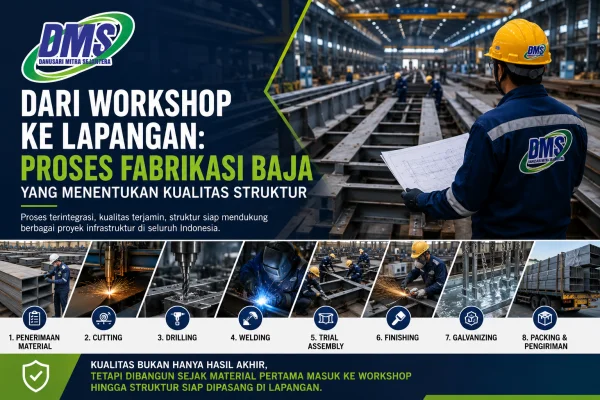
At PT Danusari Mitra Sejahtera (DMS), the fabrication workshop is the center of production activities which integrates various stages of work, from receiving materials to sending products to the project location.
Fabrication Workshop as Steel Structure Production Center
The fabrication workshop is a production facility designed to convert steel materials into various structural components that have specific functions according to project needs. This process not only involves manufacturing work, but also includes quality control, production planning, and integrated logistics coordination.
Through a structured work system, the workshop becomes a place where engineering drawings are translated into real products. Every dimension, connection, bolt hole, and other technical details must be produced accurately so that all components can be assembled perfectly during installation in the field.
In other words, the success of a construction project is greatly influenced by the quality of work carried out in the workshop.
Initial Stage: Material Reception and Verification
The fabrication process starts from receiving steel materials that come from suppliers. This stage is often considered simple, even though it has a very important role in determining the quality of the final product.
Every material received must go through a verification process to ensure compliance with project specifications. Inspections are carried out on the type of material, dimensions, quality certificate and physical condition of the material before entering the production area.
This verification aims to ensure that all materials used meet predetermined standards. In this way, the risk of using inappropriate materials can be minimized from the start of the production process.
Precision Cutting and Drilling Process
After the material is declared suitable, the next stage is the cutting process. At this stage, the steel is cut according to the sizes stated in the engineering work drawings.
Accuracy is the main factor in the cutting process. The slightest error can affect the dimensional suitability of components and potentially disrupt the assembly process at a later stage.
After cutting is complete, the material enters the drilling or drilling stage. Bolt holes and connection points are made in precise positions according to design. This process requires accurate measurements to ensure that all components can be installed perfectly during the erection process in the field.
Welding as a Determinant of Structural Strength
One of the most important stages in steel fabrication is welding. At this stage, the various components that have been cut and shaped are combined into a single structural unit.
The quality of welding largely determines the strength and reliability of the structure as a whole. Therefore, welding work must be carried out by competent workers and follow established procedures.
Apart from the welding process itself, each connection must also go through a quality inspection to ensure there are no defects that could affect the performance of the structure. With strict quality control, each joint is able to meet the required strength and safety requirements.
Trial Assembly to Ensure Compatibility of Components
Before the product is sent to the project site, many steel structural components first undergo a trial assembly or installation test process.
This stage aims to ensure that all components can be assembled according to design without problems. Through trial assembly, the production team can verify the suitability of dimensions, bolt hole positions, structural alignment, and other technical details.
If discrepancies are found, repairs can be carried out in the workshop so that the risk of delays or problems during installation in the field can be minimized. This process is an important step in maintaining project quality and efficiency.
Finishing and Galvanizing for Long Term Protection
After all components are declared suitable, the process continues to the finishing stage. At this stage, surface cleaning is carried out, tidying of the production results, and preparation for surface protection.
One commonly used protection method is galvanizing. This process provides a layer of zinc on the surface of the steel to protect the structure from corrosion and environmental influences that can accelerate material damage.
With proper protection, the service life of the structure can be extended significantly, providing added value in terms of reliability and maintenance cost efficiency.
Planned Packing and Delivery
The final stage in the fabrication process is packing and delivery to the project location. Components that have been produced are packaged according to transportation requirements and installation methods that will be used in the field.
The packing process not only aims to protect the product during transit, but also makes it easier to identify and group components when they arrive at the project location. With a planned delivery system, the erection process can take place more quickly and efficiently.
Good coordination between the production, quality control and logistics teams is the key to success at this stage.
Commitment to Quality Since the Beginning of Production
At PT Danusari Mitra Sejahtera, quality is not seen as just the final result. Quality is built from the time the first material enters the workshop until the structure is ready to be installed in the field.
Supported by an experienced workforce, adequate production equipment, and a strict quality control system, each component is produced with a focus on precision, quality and timeliness. This approach ensures that every product produced is able to meet engineering specifications and support various infrastructure project needs throughout Indonesia.
Conclusion
Reliable steel structures are not created instantly. Behind every component installed in the field, there is a long, planned and controlled fabrication process. Starting from receiving materials, cutting, drilling, welding, trial assembly, finishing, galvanizing, to delivery, each stage has an important role in determining the final quality of the product.
Through an integrated production system and consistent quality control, the fabrication workshop is the main foundation for producing steel structures that are strong, precise, and ready to support sustainable infrastructure development throughout Indonesia.
PT. Danusari Mitra Sejahtera remains committed to delivering the best service to our clients. With over 19 years of experience in steel construction and fabrication, we support national infrastructure projects.
"Quality is our top priority in every project we deliver."
For more information about our products and services, please contact our team.