The Importance of Sandblasting and Painting to Protect Steel Structures from Corrosion
Steel structure is a material that is widely used in various construction projects because it has high strength, design flexibility, and the ability to withstand long-term loads. However, one of the biggest challenges in using steel is the risk of corrosion. Exposure to air, humidity, rainwater, the marine environment, and chemicals can trigger an oxidation process that slowly reduces the quality of the material.
To overcome this risk, the steel fabrication industry implements a surface protection system through the process sandblasting And painting. These two stages are not just a finishing process, but are an important part of the quality control system that determines the service life of steel structures. With proper surface preparation and appropriate coating application, steel structures will have better resistance to various environmental conditions during their operational life.
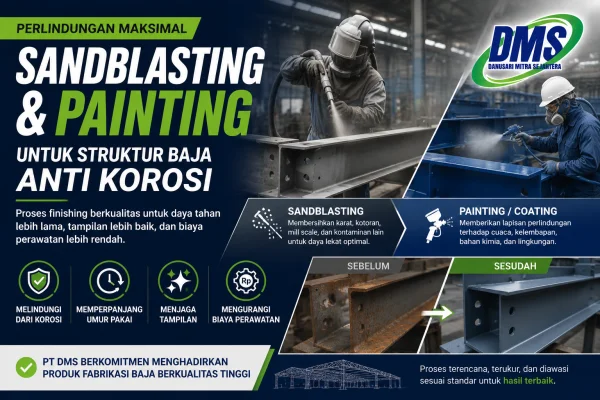
Sandblasting: Optimally Cleaning Steel Surfaces
The first stage in the protection of steel structures is the sandblasting process. This process aims to clean the entire steel surface using high-pressure abrasive media so that various adhering contaminants can be removed thoroughly.
These contaminants can be rust, mill scale, oil residue, dust, old paint, or other particles that have the potential to interfere with the adhesion of the protective layer. If the steel surface is not cleaned properly, the coating applied afterwards will peel off more easily so that protection against corrosion will not be optimal.
Apart from cleaning the surface, sandblasting also produces a certain level of roughness (surface profile). A slightly rough surface provides a larger contact area so that the paint or coating can adhere more firmly. Therefore, sandblasting results are not only assessed by the level of cleanliness, but also by the surface profile which is in accordance with the specifications of the coating system to be used.
In modern construction projects, surface cleanliness standards usually refer to international standards such as ISO 8501 or SSPC Surface Preparation Standards, so that the quality of work can be measured objectively.
Painting: Coating Protection against Corrosion and the Environment
After the sandblasting process is complete, the next stage is painting or application of the coating system. This process aims to form a protective layer that isolates the steel surface from the external environment so that corrosion reactions can be minimized.
The coating system on steel structures generally consists of several layers, namely primary coat, intermediate coat, and top coat. Each layer has a different function but complements each other in providing long-term protection.
The primer coat functions to provide strong adhesion as well as being the first layer to protect steel from corrosion. Intermediate coat increases the thickness of the protective layer and strengthens resistance to moisture and chemicals. Meanwhile, the top coat plays a role in protecting the layer beneath it from exposure to ultraviolet light, extreme weather, and provides a neater and more professional final appearance.
The choice of coating type is also adjusted to the project environmental conditions. Structures located in industrial areas, coastal areas, mining areas, or environments with high humidity levels require a coating system that has higher corrosion resistance than normal environments.
Surface Protection that Extends the Life of Steel Structures
Corrosion is a process that takes place slowly but has a big impact on the strength of the structure. A decrease in material thickness due to corrosion can reduce load capacity, increase maintenance costs, and even shorten the service life of a construction.
Through a combination of sandblasting and painting carried out according to standards, this risk can be reduced significantly. The coating layer works as a barrier that prevents direct contact between steel and water, oxygen or other corrosive substances.
Good surface protection also helps maintain the dimensional stability of steel components over the years. This is very important in structures such as multi-storey buildings, bridges, telecommunications towers, industrial facilities, and energy infrastructure that are required to have a high level of reliability.
In other words, investing in a surface protection system is not just an additional expense, but a strategic step to increase the service life of the asset and reduce the risk of future damage.
Maintains Appearance and Reduces Maintenance Costs
Apart from providing protection against corrosion, the painting system also has aesthetic benefits. A well-applied coat of paint can produce a cleaner, more professional, and uniform structural appearance according to project requirements.
For commercial buildings and public facilities, the appearance of the structure is one of the factors that also reflects the quality of construction. Coating colors are also often used as company identity, work area markers, and safety systems according to industry standards.
More than that, good surface protection can reduce the frequency of repainting and repair work due to corrosion. The better the quality of the finishing applied from the start, the smaller the maintenance costs that must be incurred during the building's operational period.
This approach provides economic benefits because the project owner does not need to replace components or major repairs too quickly. In this way, the life cycle costs of the structure can be reduced more efficiently.
The Importance of Quality Control in the Finishing Process
The success of sandblasting and painting does not only depend on the coating material used, but also on consistent implementation of quality control. Each stage must be checked to ensure that it complies with the specified technical specifications.
Inspection usually starts from checking the cleanliness level of the sandblasting results, measuring the surface profile, environmental conditions during painting, to testing the thickness of the paint layer using tools. Dry Film Thickness (DFT) Gauge.
Apart from that, parameters such as steel surface temperature, air humidity and dew point are also a concern because they greatly influence the quality of the coating application. If painting is carried out in inappropriate conditions, the adhesion of the coating can decrease and accelerate the appearance of damage.
Through a planned inspection system, potential coating failures can be detected early so that the quality of surface protection is maintained until the structure is delivered to the project site.
PT DMS Commitment in Steel Structure Surface Protection
As a company engaged in steel structure fabrication, PT Danusari Mitra Sejahtera (PT DMS) places the sandblasting and painting process as an important part of the quality control system. Surface protection is not viewed simply as a final stage of production, but as an investment to maintain product quality throughout its service life.
Each steel component is processed through planned stages, starting from surface preparation, coating application according to project specifications, to quality inspection before delivery. This approach aims to ensure that each product has optimal protection against corrosion and is ready to face various environmental conditions in the field.
With the support of a competent workforce, standardized work procedures, and commitment to quality control, PT DMS continues to provide steel fabrication solutions that are not only structurally strong, but also have high resistance to corrosion. Through a sandblasting and painting process that is carried out correctly, the service life of the structure can be extended, maintenance costs can be reduced, and construction reliability is maintained in the long term.
PT. Danusari Mitra Sejahtera remains committed to delivering the best service to our clients. With over 19 years of experience in steel construction and fabrication, we support national infrastructure projects.
"Quality is our top priority in every project we deliver."
For more information about our products and services, please contact our team.